
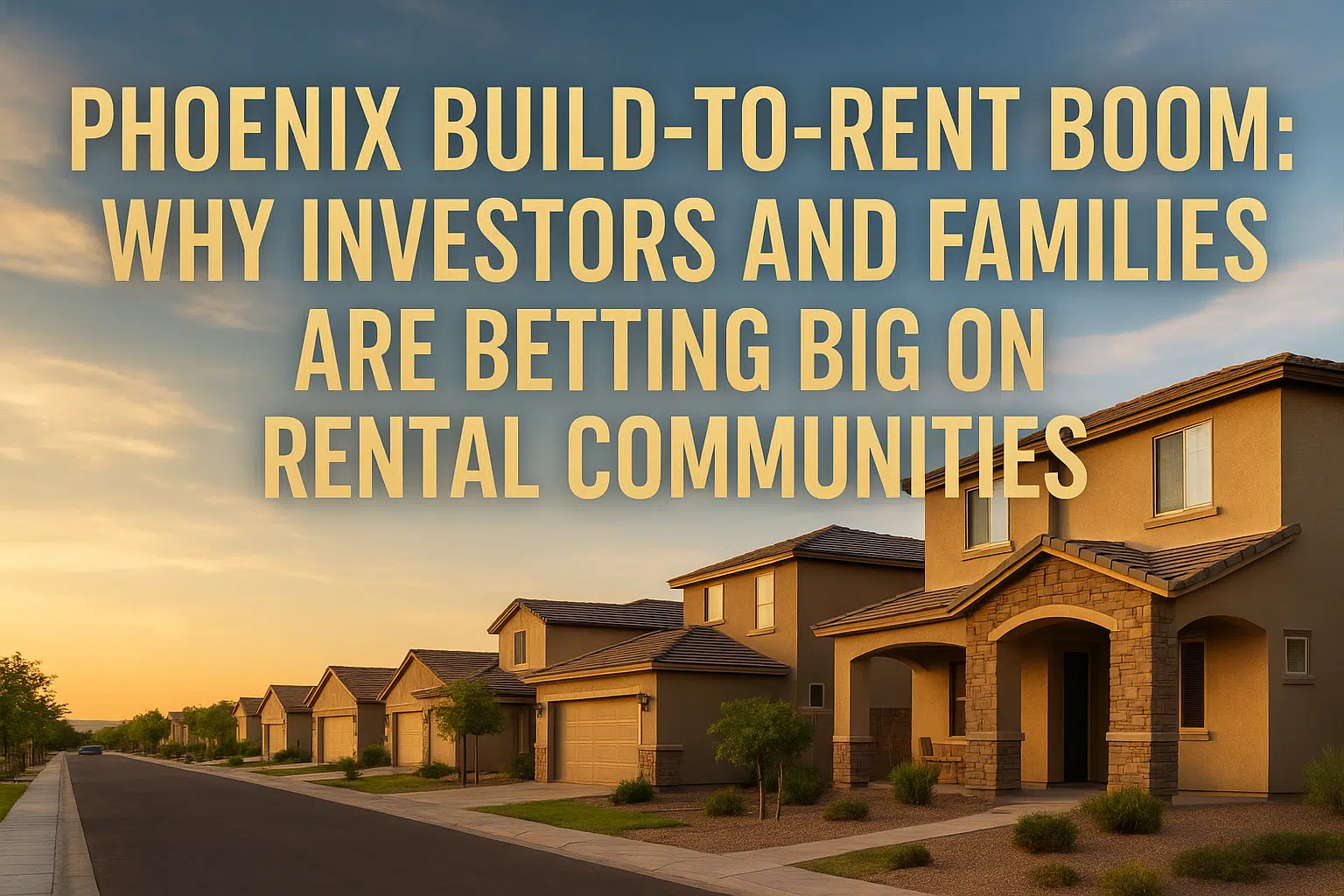
Phoenix Build to Rent Boom: Luxury Rentals Redefine the Market
The Phoenix Build to Rent Boom: Why Investors and Families Are Betting Big on Rental Communities
Introduction: A New Housing Revolution in Phoenix
The Phoenix real estate market has always been a national talking point. From rapid suburban sprawl in the 1990s to the explosive growth of the 2020s, the Valley of the Sun has never stopped attracting attention. But in 2025, one particular trend is taking center stage: Build-to-Rent (BTR) communities.
Unlike traditional rental apartments or single-family home sales, BTR communities are entire neighborhoods designed specifically for renters. Think single-family homes with backyards, garages, and community amenities — but managed like an apartment complex. And Phoenix is leading this movement.
As affordability challenges, population growth, and lifestyle shifts converge, both investors and families are doubling down on this model. So why exactly is Phoenix the hotbed of the build-to-rent boom? Let’s break it down.
Why Build-to-Rent Is Surging in Phoenix
1. Affordability Pressures
The median home price in Phoenix sits around $480,000 (2025).
Rising mortgage rates (6–6.5%) have priced out many first-time buyers.
Renting offers flexibility without the crushing down payment.
BTR homes are the middle ground — they deliver the perks of suburban living without the long-term commitment of ownership.
2. Population Growth
Phoenix continues to be one of the fastest-growing metros in the U.S.. Driven by job opportunities in tech, healthcare, and manufacturing, thousands of newcomers arrive every month. Many are relocating from California, where housing is even less affordable.
For families moving in, BTR is a quick way to settle into a neighborhood lifestyle without diving headfirst into a competitive housing market.
3. Lifestyle Shifts
Millennials and Gen Z — now the largest renter demographics — value flexibility, mobility, and amenities. BTR communities offer features like:
Clubhouses
Pools
Pet-friendly layouts
Walking trails
Smart home tech
This lifestyle-first model is appealing to a generation less fixated on homeownership.
The Investor’s Perspective: Why Build-to-Rent Is a Goldmine
Investors see Phoenix BTR as more than a trend — it’s a recession-resistant model.
Steady Rental Demand
Phoenix vacancy rates remain tight. BTR homes offer stability for landlords compared to fluctuating apartment demand.Higher Rent Premiums
Families are willing to pay a premium for more space and privacy. Many BTR homes fetch 20–30% higher rents than apartments.Scalability
Unlike scattered single-family rentals, BTR is efficient. Developers can manage entire communities with shared amenities.Institutional Money Flowing In
Major investment firms like Blackstone and Invitation Homes are already acquiring BTR properties in Phoenix. This validates the long-term potential.
How Families Benefit: Renting Reimagined
While investors see profit, families see quality of life.
Backyards without the mortgage: Perfect for kids and pets.
Community feel: Safer, more structured environments compared to scattered rentals.
No maintenance stress: Management handles repairs.
Flexibility: Easy to move without selling.
For many families, especially newcomers to Phoenix, BTR offers the best of both worlds — space and lifestyle, minus the commitment.
Phoenix Neighborhoods Leading the Build-to-Rent Trend
Goodyear & Buckeye
Affordable land makes them hotspots for large-scale BTR projects.
Popular with young families.
Mesa & Gilbert
Strong schools and suburban amenities.
Attract families seeking space but avoiding steep buying costs.
North Phoenix
Close to TSMC’s semiconductor plant.
Strong job-driven demand for rentals.
Chandler & Tempe
Blend of young professionals and families.
Tech industry keeps demand high.
Challenges Facing Build-to-Rent in Phoenix
No boom is without hurdles:
Rising Construction Costs: Material and labor shortages push up project budgets.
Zoning Restrictions: Some cities remain cautious about large BTR developments.
Community Pushback: Critics argue that BTR reduces opportunities for homeownership.
Interest Rate Risks: Higher borrowing costs can slow development timelines.
Still, the overall momentum remains strong — demand is outpacing challenges.
Future Outlook: The Next 5 Years
Experts predict:
Phoenix will remain the #1 metro for BTR growth.
Rental communities could make up 15–20% of all new housing developments by 2030.
Families priced out of ownership will continue fueling demand.
Institutional investors will dominate the landscape, but local builders are entering too.
By 2030, Phoenix could be seen as the capital of America’s renter nation.
Practical Tips
For Investors
Target suburban growth areas like Buckeye, Queen Creek, and Goodyear.
Think long-term — BTR works best as a hold strategy, not a quick flip.
Follow job growth — rental demand tracks employment hubs.
For Renters
Look early — BTR communities fill fast.
Compare amenities — some communities offer better value.
Negotiate lease terms — longer commitments may bring better rates.
Conclusion: The Phoenix Build-to-Rent Revolution
The Phoenix housing market is evolving. While affordability challenges remain, BTR communities are redefining what it means to rent. For families, it’s a lifestyle upgrade. For investors, it’s a resilient and profitable model.
As Phoenix cements its role as the nation’s build to rent capital, one thing is clear: renting is no longer just a stepping stone — it’s becoming a destination in itself.


No comment